The Veil Features
Universe
Overview The Veil & The Void Factions Species Key Locations History & Timeline Classes & Roles
Lore
Key Figures Culture & Society Interstellar Travel The Null Protocol The First Silence ✦
Rules Join Beta

Six Species.
One Galaxy to Navigate.

Six distinct peoples, each shaped by history, culture, and a different relationship with the Veil. Each one a different way of seeing the same broken galaxy.

Arion
The Adaptable
Arion
Veilborn Rate
Average
Common Classes
All Classes
Cultural Value
Adaptability

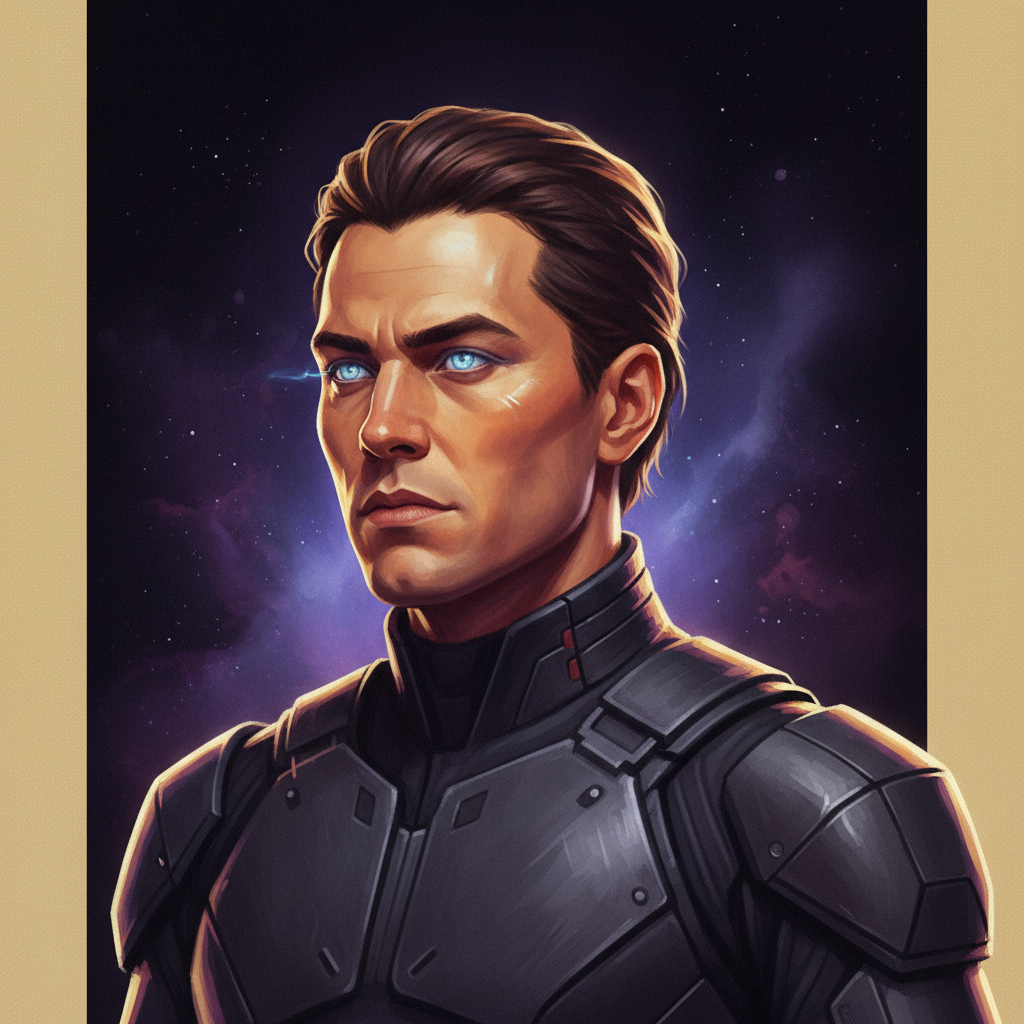
Bipedal, with skin tones spanning the broadest spectrum of any species in the galaxy and the widest range of phenotypes — which makes Arion simultaneously the most recognizable and least recognizable species depending on context. Walk into any port, any station, any world, and there will be Arion there. They are everywhere.

The galaxy's most internally diverse civilization. They have produced some of its greatest tyrants and some of its greatest liberators — often from the same family lineages, sometimes within the same generation. Arion appear in the Sovereignty and the Coalition and the Merchant Drift and every other faction in significant numbers. Nobody is surprised to see an Arion anywhere, doing anything.

Arion are Veilborn at roughly average rates, but unlike the Sylari, they have no formal cultural tradition of identifying or training the Veilborn among them. An Arion Veilborn child often goes years without anyone recognizing what they are. This has produced some of the Veil's most self-taught practitioners — and some of its most dangerously untrained ones.
The Tidecaller Order has a quiet standing offer for any Arion who presents with Veilborn sensitivity: come to Ashenveil. No obligations. No registration. Just training. Uptake is low. Arion tend to be suspicious of institutions that make promises with no strings visible.
Keth
The Architects
Keth
Veilborn Rate
Very Rare
Common Classes
Fabricant · Lorekeeper · Vanguard
Cultural Value
Making

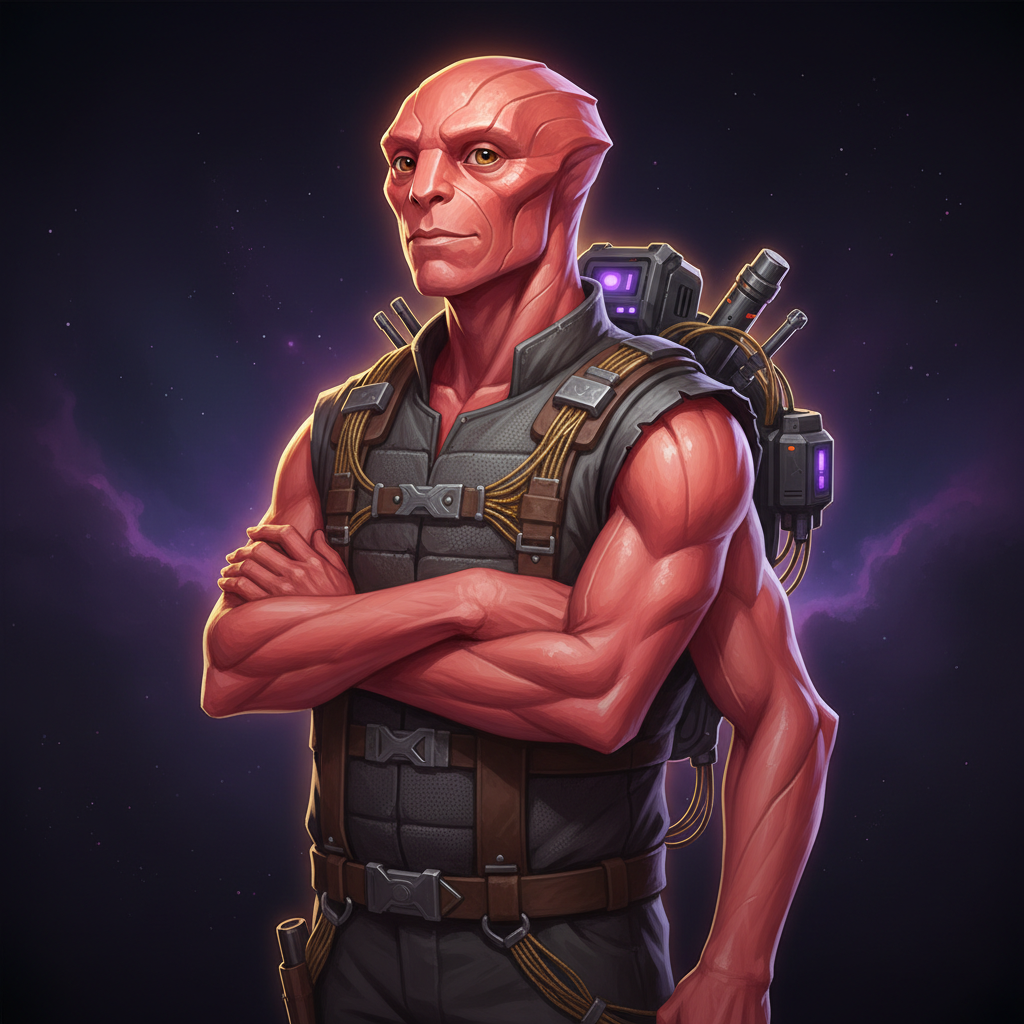
Four arms — two full pairs, the lower slightly shorter with greater fine-motor precision — and coral-pink to deep terracotta rough-textured skin that darkens under stress. Flat broad faces with large lateral eyes evolved for exceptional peripheral vision, originally for detecting movement in open terrain. The lateral positioning makes Keth look perpetually aware of everything happening around them. This impression is accurate.

Keth culture is built around making things — not just objects, but systems, relationships, and long-term plans. The making is the value. The engineering guilds that Keth have built over centuries are among the most powerful non-governmental bodies in the galaxy, capable of refusing contracts from factions and having those factions back down rather than risk losing access to Keth engineering expertise.

Almost never Veilborn. The culture is deeply empirical and skeptical of the Veil in a way that is not hostility but genuine intellectual disagreement. Keth who encounter the Veil tend to want to measure it, model it, and find its load-bearing structures. Several of the most important pieces of Veil research have been done by Keth scientists who didn't believe in the Veil and were trying to prove it didn't exist.

The handful of Keth Veilborn who have ever been formally trained describe the experience of first perceiving the Veil as "finally finding the wiring." They take to Tidecalling or Voidshaping with unusual speed, having spent their entire lives building intuition for systems.
Vrask
The Unbowed
Vrask
Veilborn Rate
Below Average
Common Classes
Vanguard · Tidecaller · Wraith
Cultural Value
Word-Keeping

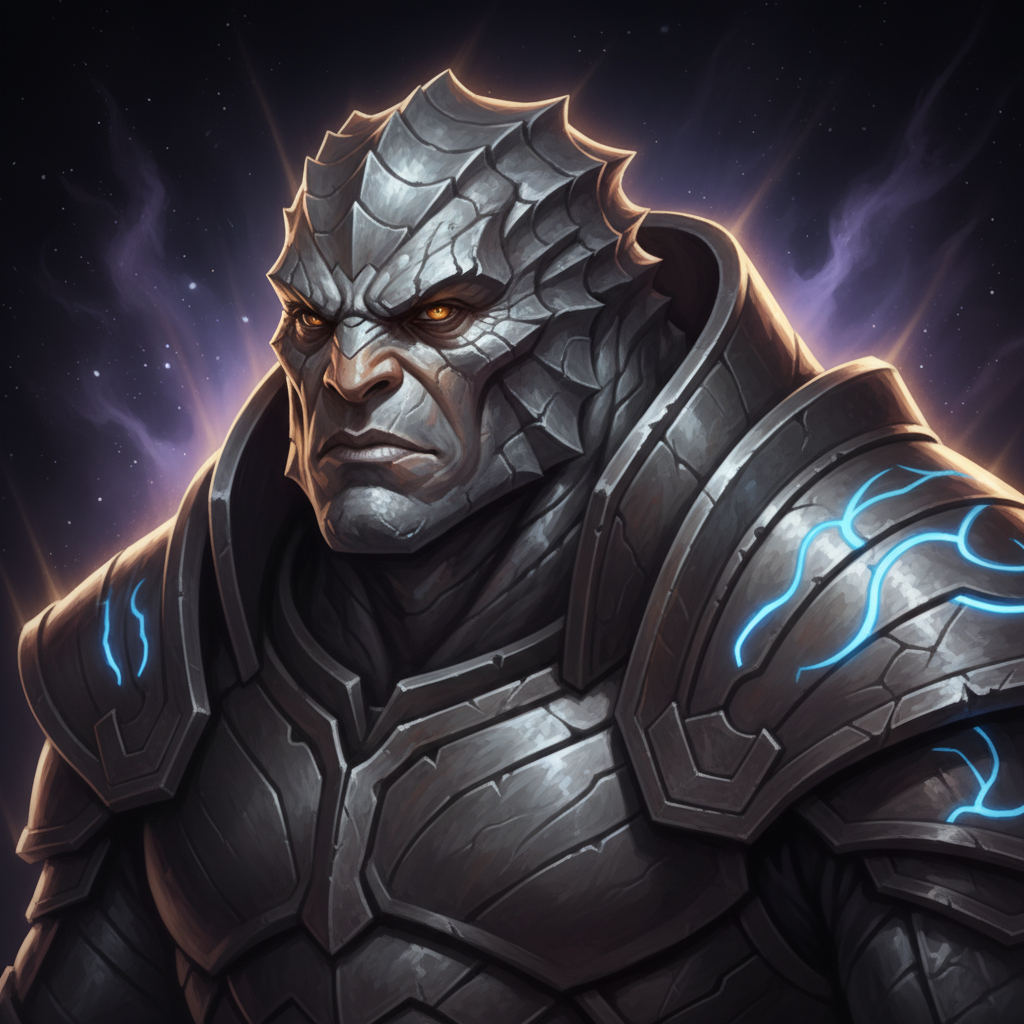
Nearly two meters tall, with banded grey-silver scales that shift subtly with temperature — and, though Vrask will not confirm this, with emotion. The scale-color shift under stress, anger, grief, and fierce joy is well-documented by outside observers. The Vrask official position is that this is a thermal response and has nothing to do with feeling. Outside observers have learned not to press the point.

Blunt angular faces, four small horns arranged above the brow ridge, eyes of gold or amber or deep red. Vrask move with the particular deliberateness of beings who have decided in advance that every movement will be worth making. Their honor culture is not performative — it is a genuine ethical framework centered on word-keeping. An oath given by a Vrask is a structural fact. A Vrask who breaks their given word is, by the standards of their culture, functionally dead. They may continue to exist. That is not the same thing as being alive.

Vrask are Veilborn at below-average rates. The ones who are tend to become extraordinarily powerful Tidecallers, possibly because the Vrask discipline around commitment and follow-through translates directly into the kind of sustained intention Tidecalling requires at its deepest levels.

Vrask in the Tidecaller Order tend toward the Guardian subclass — warrior-practitioners who understand the Veil as something that must be defended, not just sensed. The Free faction of the Order has a disproportionate number of Vrask, who find the Bound faction's compromises with the Sovereignty to be a form of oath-breaking they cannot work around.
Sylari
The Resonant
Sylari
Veilborn Rate
5–10× Average
Common Classes
Tidecaller · Wraith · Lorekeeper
Cultural Value
Perception

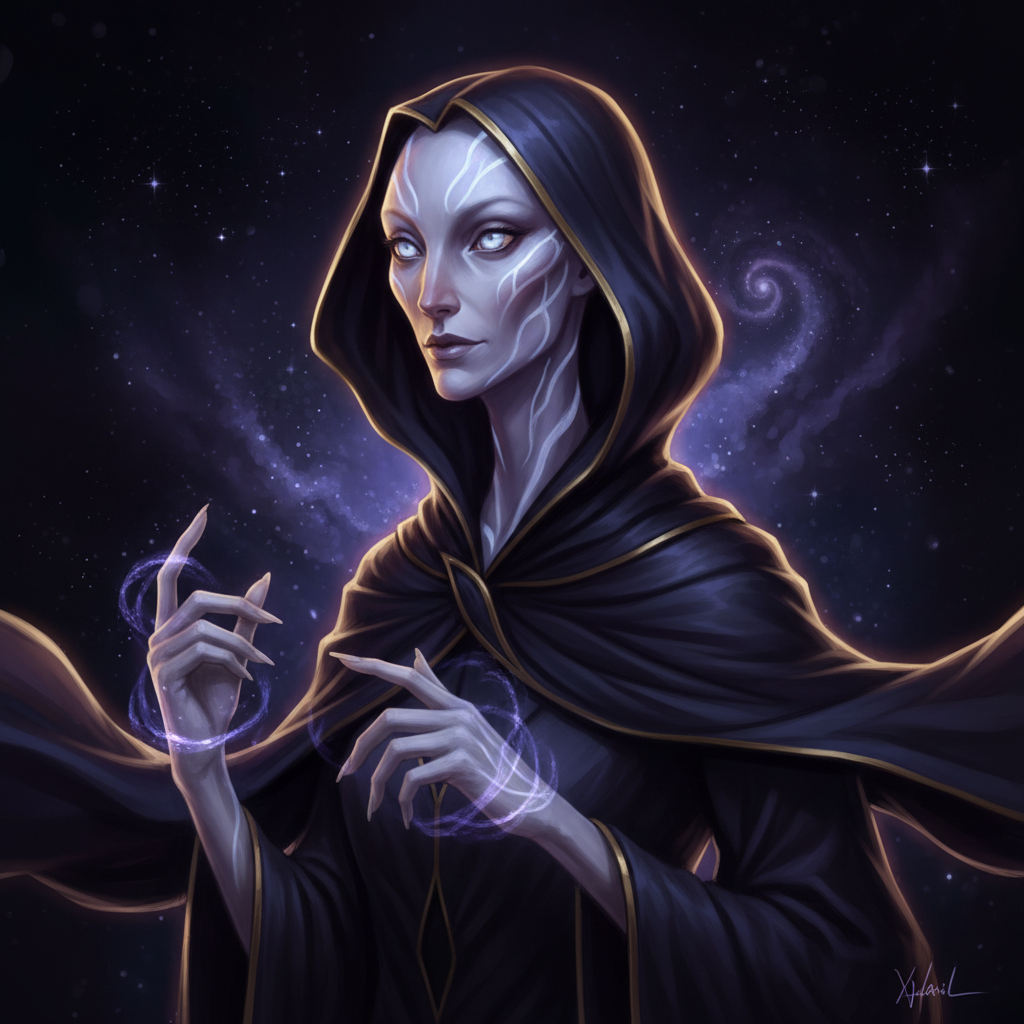
Slender, with bioluminescent patterns beneath translucent outer skin that pulse with emotional state — brighter with excitement or strong feeling, dimmer with calm or deliberate stillness. In crowded spaces, Sylari learn to suppress the light, to manage it the way others manage facial expression. In private, among trusted people, the light moves like breathing. Watching a Sylari in a genuinely comfortable moment is like watching something rare: a being fully present in itself.

Skin ranges from pale grey to deep blue-violet beneath the patterns. Their culture prizes perception over action — the Sylari understanding is that you cannot act well on what you have not understood fully. This makes them appear patient to outsiders. It is not patience exactly; it is priority. They are not waiting. They are finishing looking.

Veilborn at five to ten times the rate of any other species. The Tidecaller Order recruits from Sylari communities with particular intensity — which the Sylari communities have complicated feelings about. Being treated as a resource, even a valued resource, is not the same thing as being treated as a person. The Order's Free faction has made this tension part of its argument against Sovereignty integration.

There is a Sylari cultural saying that does not translate well: velaneth sori — roughly "to look until the thing looks back." Sylari Tidecallers who achieve the Sage subclass describe their relationship with the Veil in exactly these terms.
Naxxid
The Eternal
Naxxid
Veilborn Rate
Unique (Textural)
Common Classes
Lorekeeper · Fabricant · Tidecaller
Cultural Value
Depth

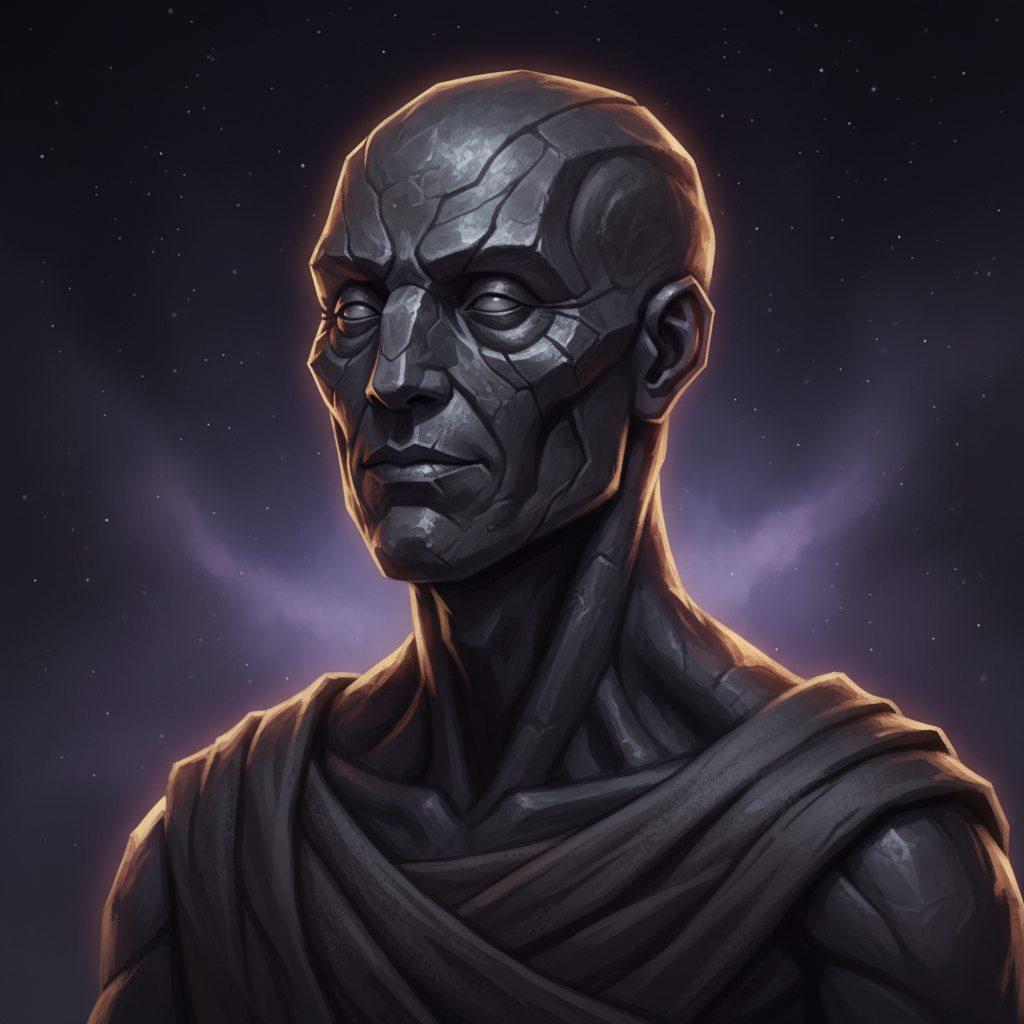
Silicon-based crystalline lifeforms. Young Naxxid are semi-translucent — internal structure visible as faint geometric patterns that glow with something between bioluminescence and refractive light. Elder Naxxid grow to three meters and beyond, opaque, faceted, their internal patterns no longer visible but somehow more present, like heat through stone.

They don't think slowly. They think deeply — running multiple threads simultaneously, integrating information at a different rate than biological neural structures. A Naxxid who pauses thirty seconds before answering a question is not deciding what to say. They finished deciding seven seconds in. They are now also resolving four other questions the conversation implied that you did not ask.

The oldest extant civilization in the galaxy. Their recorded history goes back forty thousand years; their oral tradition farther than that. They experience the Veil not as flow or current but as texture — a quality of surface they perceive through their crystalline structure. Their Veil practices, called Resonance Reading, are diagnostic rather than offensive: they can identify Veilborn, sense emotional residue, read the Veil-state of a location. Naxxid Voidshapers are nearly nonexistent. They describe the Void as "an itch they cannot locate," which is the most unsettled any Naxxid has ever sounded about anything.

The Naxxid do not age in the same way biological species age. The oldest living Naxxid, Elder Axxandrel, is somewhere between twelve and fourteen thousand years old. She was alive before the current Sovereignty. She was alive before the one before that. She remembers things that every other civilization has only written down incorrectly.
Drifborn
The Unanchored
Drifborn
Veilborn Rate
Average
Common Classes
Wraith · Vanguard · Fabricant
Cultural Value
Chosen Family

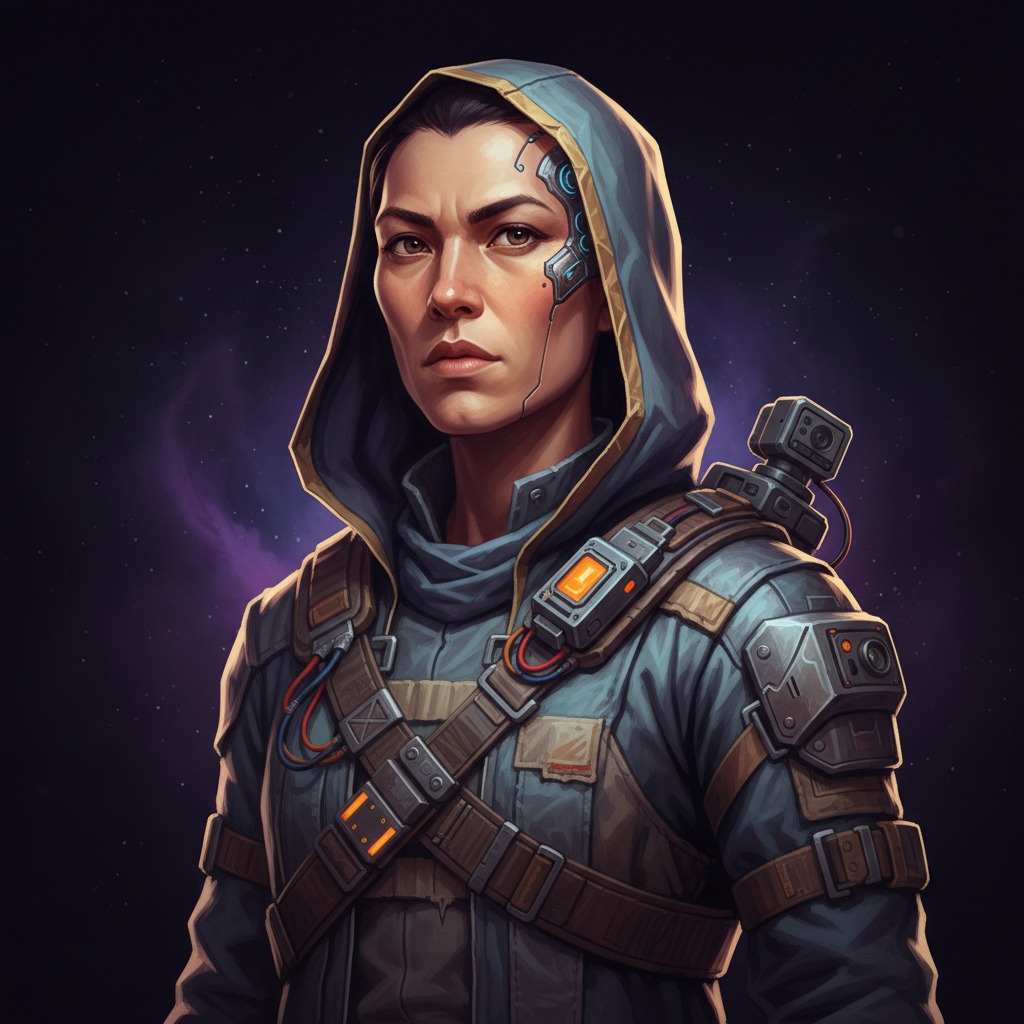
Not a biological species — a cultural category. Any being of any species born on deep-space stations, generation ships, or long-haul vessels qualifies. The commonalities are physical where they are consistent: low-gravity adaptations appear — longer limbs, exceptional three-dimensional spatial orientation, the particular kind of balance that comes from a lifetime of corridors that sometimes decide gravity is optional.

The deeper commonalities are cultural. Drifborn know every port because every port has been home for some period of time. They read every room on entry because reading rooms is how you survive spaces where you don't know the rules yet. They speak every dialect not from formal study but because every dialect is what the people around them were speaking that month. They build chosen-family bonds with extraordinary speed and maintain them with extraordinary intensity, because home is not a place — it is the people you have decided to keep.

Most factions see Drifborn as useful and perpetually untrustworthy. This is largely the Drifborn's preference. An organization that wants to know where your loyalties lie before they'll hire you is an organization with a very specific kind of flexibility problem. Drifborn make excellent operatives for any faction willing to accept that the job will get done without the faction necessarily knowing exactly how.

Drifborn have a term for the moment when you realize a place has become home: finding the gravity. Most Drifborn report finding it multiple times in their lives. A few say they have never found it. Neither group describes the other's experience as wrong.